
Sprinkler Fire Suppression System: The Working Principle of Invisible Heroes on the Ceiling
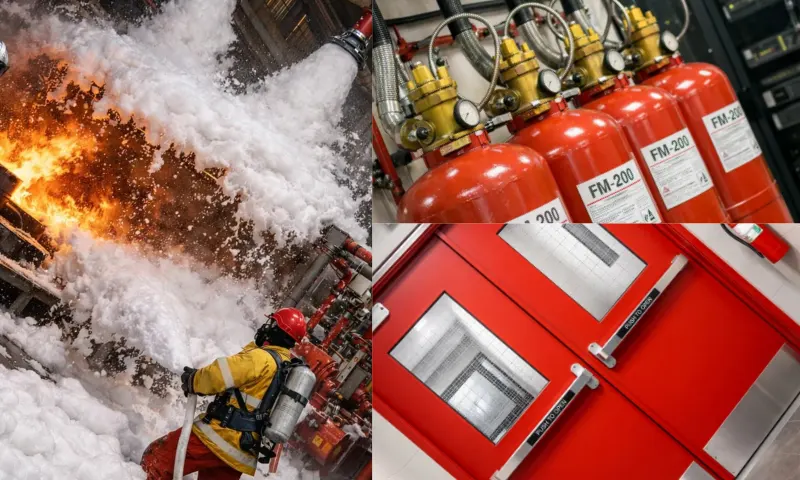
Things You Might Not Know About Sprinkler Fire Suppression Systems
Those small glass tubes you see when you look up in a large warehouse or a crowded shopping mall are actually a building's most critical line of defense. At UKAZ FIRE AND SAFETY SYSTEMS, we witness daily how life-saving these mechanisms are, which focus on heat rather than smoke. These devices, whose detailed technical infrastructure can be found at https://ukazyangin.com/urun/sprinkler-yangin-sondurme-sistemleri/, can stop the vertical and horizontal spread of flames in seconds. The sprinkler fire suppression system prevents massive fires by discharging water directly onto the source when the ambient temperature exceeds a certain threshold, causing the glass tube to burst.
Sprinkler Fire Suppression System and Periodic Control Discipline
The scene we see in movies, where all sprinklers spray water simultaneously with a single lighter flame, is purely fiction. In real engineering, the process is much more controlled and intelligent.
- Targeted Intervention: Only the head that heats up and bursts its glass tube releases water; thus, water damage is avoided in areas without fire.
- Pressurized Readiness: In wet pipe systems, water is kept ready to spray immediately behind the valve.
- Heat Sensitivity: The color of the liquid inside the glass tubes determines at what temperature the system will activate (typically 68°C).
After the system installation is complete, the biggest misconception is to think it will work flawlessly forever. Limescale in the pipes, oxidation of valves, or deficiencies in the water tank can prevent the system from responding at that critical moment. Therefore, annual hydrostatic tests and alarm valve checks must not be neglected. It is only through these regular inspections that it becomes clear whether the fire pumps can provide the required flow rate in a crisis. Remember, fighting fire is a team effort, and mechanical systems are the most loyal members of this team. A properly planned flow chart protects not only the structure but also all the labor and human lives within it.





